By: David and Stephanie Eubank
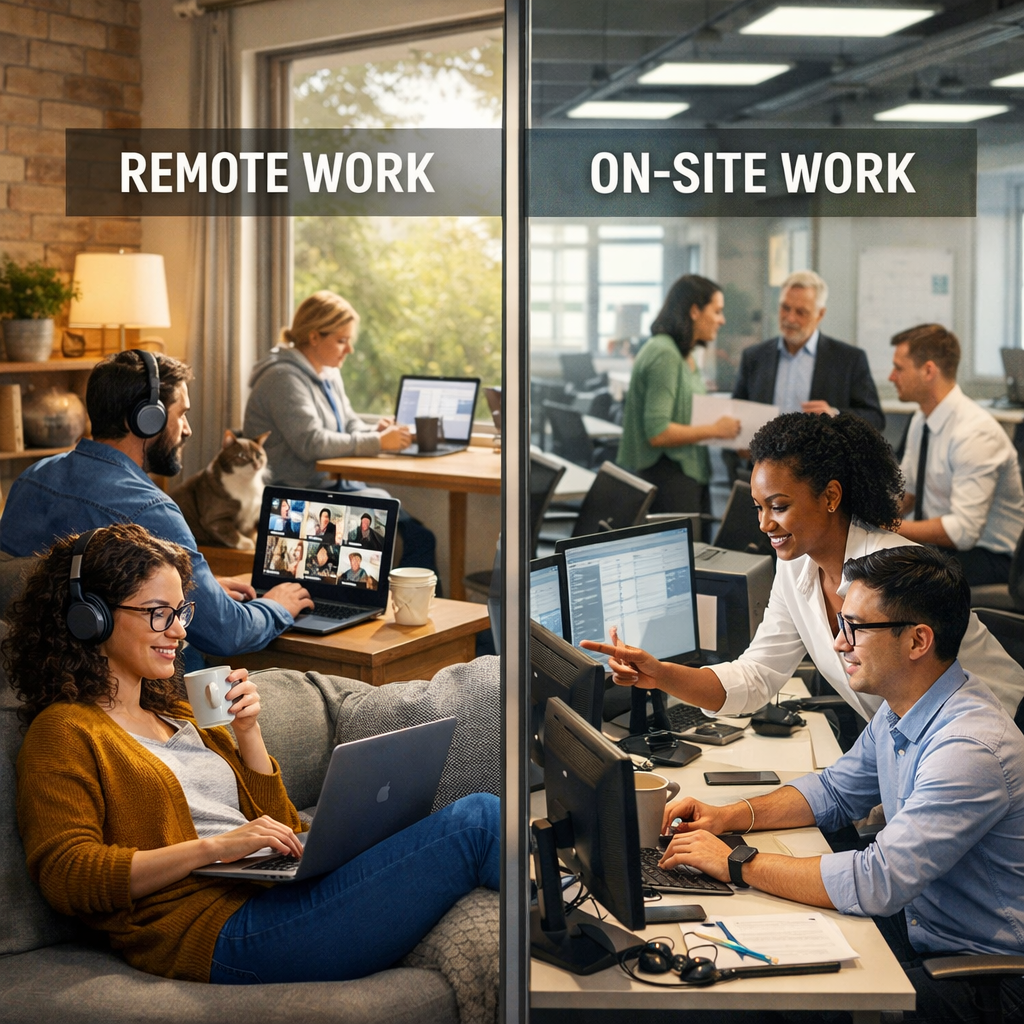
Remote and hybrid work are now firmly embedded in modern organizational design, yet access to flexible work remains unevenly distributed. Across industries, remote work is increasingly reserved for leaders and subject matter experts, while many non‑management roles despite being fully compatible with remote delivery are required to remain on‑site. For the neurodivergent workforce, which represents approximately 15–20% of the global population, this structural imbalance creates significant barriers to productivity, engagement, and retention and ultimately undermines organizational performance (Kalmanovich‑Cohen & Stanton, 2023; Rollnik‑Sadowska & Grabińska, 2024).
Neurodivergent employees, including individuals with autism, ADHD, dyslexia, and other cognitive differences, often experience traditional in‑person workplaces as misaligned with how they process information. Sensory overload, constant interruptions, unspoken social expectations, and rigid schedules can significantly tax cognitive resources without improving outcomes. Research shows that remote work reduces these environmental stressors by allowing neurodivergent employees greater control over sensory input, communication modes, and workflow pacing, thereby supporting more consistent productivity (Brooks et al., 2024; Kalmanovich‑Cohen & Stanton, 2023).
When remote work is framed as a leadership privilege rather than a job‑design decision, neurodivergent employees in followership roles are disproportionately excluded from its benefits. This exclusion reinforces power distance and contributes to higher rates of burnout, disengagement, and underemployment among neurodivergent workers outcomes that persist across sectors regardless of industry type (Doyle, 2020; Vargas‑Salas et al., 2025). Organizations that require in‑person presence for neurodivergent employees while leaders operate remotely unintentionally signal mistrust and devalue cognitive diversity within their workforce.
Evidence from organizational psychology and human resource research indicates that congruence in working conditions between leaders and followers strengthens trust, followership behavior, and role performance. Conversely, incongruence such as remote leaders overseeing in‑person teams weakens engagement and accountability, particularly for neurodivergent employees who already navigate environments not built for their needs (Zhang et al., 2025). This dynamic represents a missed opportunity to design more inclusive and cohesive team structures that enhance performance.
From a business perspective, excluding neurodivergent employees from remote work options harms innovation and productivity. Neurodivergent professionals often bring strengths such as pattern recognition, sustained focus, creativity, and attention to detail. These strengths are most fully realized in environments that enable deep, uninterrupted work and clear, asynchronous communication features strongly supported by remote and hybrid modalities (Austin & Pisano, 2017; Hartman & Hartman, 2024). Limiting remote access based on hierarchy rather than function prevents organizations from fully leveraging these capabilities.
Research consistently demonstrates that universal access to inclusive practices such as flexible scheduling, remote work, and structured communication benefits not only neurodivergent employees but the workforce as a whole. These practices reduce turnover, improve engagement, and lower accommodation costs while enhancing productivity across industries (Global Workplace Analytics, 2026; Kalmanovich‑Cohen, 2025). Framing remote work as a structural accommodation rather than an earned reward aligns organizational systems with sustainable workforce management principles.
Ultimately, the business sector cannot afford to treat neurodivergent inclusion as an optional initiative. As remote work continues to shape the future of work, organizations that equitably extend flexible modalities based on job requirements rather than rank will outperform those that preserve hierarchical access. Designing work environments that support neurodivergent employees is not only an inclusion strategy it is a competitive necessity that strengthens resilience, innovation, and long‑term organizational success.
References
Austin, R. D., & Pisano, G. P. (2017). Neurodiversity as a competitive advantage. *Harvard Business Review, 95*(3), 96–103.
Brooks, S. K., Hall, C. E., Rogers, M. B., & Greenberg, N. (2024). Homeworking experiences of neuro-divergent workers: A systematic review. *Occupational Medicine*. https://doi.org/10.1093/occmed/kqae095
Doyle, N. (2020). Neurodiversity at work: A biopsychosocial model and the impact on working adults. *British Medical Bulletin, 135*(1), 108–125. https://doi.org/10.1093/bmb/ldaa021
Global Workplace Analytics. (2026). *Hybrid work costs and benefits*. https://globalworkplaceanalytics.com/resources/costs-benefits
Hartman, L. M., & Hartman, B. L. (2024). Neurodiversity in the workplace: An agenda for research and action. *Journal of Vocational Rehabilitation*. https://doi.org/10.1002/dvr2.70000
Kalmanovich‑Cohen, H., & Stanton, S. J. (2023). How can work from home support neurodiversity and inclusion? *Industrial and Organizational Psychology, 16*(1), 20–24. https://doi.org/10.1017/iop.2022.93
Rollnik‑Sadowska, E., & Grabińska, V. (2024). Managing neurodiversity in workplaces: A review and future research agenda. *Sustainability, 16*(15), 6594. https://doi.org/10.3390/su16156594
Vargas‑Salas, O., Alcazar‑Gonzales, C., Fernández‑Fernández, F. A., Molina‑Rodríguez, F. N., & Carcausto‑Zea, M. L. (2025). Neurodivergence and the workplace: A systematic review of the literature. *Journal of Vocational Rehabilitation, 63*(1), 83–94. https://doi.org/10.1177/10522263251337564
Zhang, G., Zhao, W., & Meng, J. (2025). The impact of leader–follower power distance congruence on employees’ job role performance in the digital workplace. *Digital Economy and Sustainable Development, 3*(22). https://doi.org/10.1007/s44265-025-00073-6
 Neuro Spice Everything Nice
Leave a comment