By: David and Stephanie Eubank
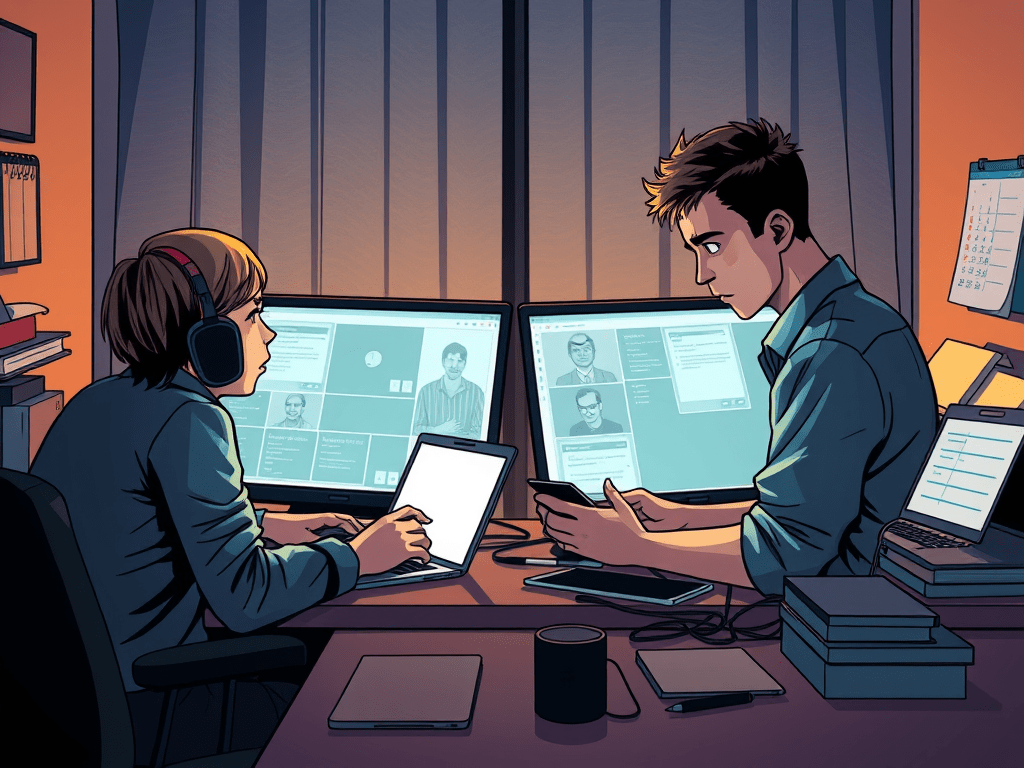
While professional isolation affects all remote employees, its impact is often more intense and more consequential for disabled workers, particularly those who are neurodivergent. Remote work can offer meaningful accessibility benefits, yet research shows that isolation amplifies structural inequities already experienced by disabled professionals.
1. Loss of Access to Accommodations and Informal Support Networks
Many disabled and neurodivergent workers rely on a mix of formal accommodations and informal in‑person interactions to manage tasks, gain clarity, and stay engaged. Remote environments often reduce these supports, especially when accommodations are not adapted for virtual workflows.
Studies indicate that workplace isolation increases stress, reduces well‑being, and impairs performance for remote workers who lack access to adequate support tools (O’Hare et al., 2024).
This is especially critical for neurodivergent workers who may require:
- Executive functioning supports
- Transparent communication
- Predictable routines
- Sensory‑friendly environments
- Assistive or adaptive technology
When these supports are inconsistent, the risk of burnout and disengagement increases.
2. Reduced Visibility Magnifies Existing Bias
Disabled professionals already face barriers in career visibility and advancement. Remote work can unintentionally intensify this when leaders rely on “face time” or choose colleagues who are physically present for opportunities.
A comprehensive review of telework challenges found that isolation harms productivity and career trajectories, disproportionately affecting workers already marginalized in traditional workplaces (Figueiredo et al., 2025).
Neurodivergent workers, who may struggle with self‑promotion or interpreting workplace politics, are particularly vulnerable to being overlooked for:
- Promotions
- Leadership roles
- Stretch assignments
- Committee memberships
- Mentorship
3. Increased Cognitive Load and Anxiety
Remote work often requires sustained digital communication, rapid task‑switching, and navigating multiple platforms, conditions that research shows can heighten cognitive load for neurodivergent individuals.
A 2024 study found that loneliness and workplace isolation were strongly associated with higher stress and lower well‑being, even when remote workers felt productive (O’Hare et al., 2024).
For neurodivergent professionals, this combination of isolation and cognitive strain can result in:
- Masking or camouflaging behaviors
- Overcompensation leading to burnout
- Difficulty interpreting tone in virtual communication
- Fear of asking for accommodations or support
4. Fewer Opportunities for Mentorship and Advocacy
Disabled employees benefit significantly from mentorship, advocacy, and allyship. However, these connections most often form informally, before or after meetings, at conferences, or through casual visibility on campus or in the office.
Remote work reduces these moments and research shows that virtual environments already limit spontaneous collaboration and knowledge sharing (Figueiredo et al., 2025).
For neurodivergent employees who may rely heavily on structured pathways and explicit feedback, reduced access to mentors can stall:
- Skill development
- Advancement
- Professional identity growth
- Confidence
5. Greater Risk of Miscommunication and Misinterpretation
Without body language, facial cues, or tone variation, remote communication can be especially challenging for autistic or ADHD employees. Studies show that the social distance created by remote work can reduce trust and increase misunderstandings unless leaders intentionally develop digital communication skills (Bravo‑Duarte et al., 2025).
This can lead to:
- Unfair performance evaluations
- Incorrect assumptions about engagement
- Social fatigue
- Team disconnect
What Leaders Can Do to Support Disabled and Neurodivergent Remote Employees
Research offers several actionable strategies:
1. Prioritize Accessible Communication
Leaders should:
- Provide clear, written instructions
- Use multiple formats (visual, verbal, written)
- Offer asynchronous participation options
- Avoid last‑minute changes to routines
Digital communication clarity is identified as a leading competency for effective telework leadership (Bravo‑Duarte et al., 2025).
2. Normalize and Encourage Use of Accommodations
Remote employees may be reluctant to request adjustments. Leaders should:
- Regularly reaffirm accommodation processes
- Offer optional camera‑off participation
- Provide executive functioning supports (timelines, agendas, summaries)
- Use accessible tools and platforms
3. Create Intentional Visibility Pathways
Instead of relying on physical presence, managers can:
- Spotlight contributions publicly
- Offer structured check‑ins about career goals
- Ensure project opportunities are equitable
- Establish disability‑inclusive talent pipelines
4. Foster Community and Neurodiversity‑Affirming Culture
Remote workers thrive when they feel connected. Leaders can:
- Host optional social spaces
- Encourage ERG participation
- Celebrate neurodiversity awareness
- Provide psychological safety for self‑advocacy
Harvard Business Review advises leaders to communicate with remote teams as whole people, which is especially beneficial for marginalized groups (Montañez, 2024).
How Disabled and Neurodivergent Remote Workers Can Protect Themselves
1. Build Digital Visibility
- Share wins regularly
- Attend optional events when possible
- Connect intentionally with colleagues
- Use LinkedIn or internal profiles to highlight strengths
2. Advocate for Accommodations Early
- Document needs
- Request structured support
- Use assistive technologies widely available in remote work
3. Create Personal Support Networks
- Find mentors or sponsors
- Join ERGs or disability networks
- Build community outside work through coworking spaces or online groups (Young Entrepreneur Council, 2023).
4. Protect Energy Through Boundaries
- Use calendar blockers
- Establish work‑life structure
- Seek environments that reduce sensory overload
Work Cited
Bravo-Duarte, F., Tordera, N., & Rodríguez, I. (2025). Overcoming virtual distance: A systematic review of leadership competencies for managing performance in telework. Frontiers in Organizational Psychology.
Dias-Oliveira, E., Sobral, F., Morais, C., Gomes, A. R., & Simães, C. (2022). Team leaders’ strategies and employees’ professional isolation, burnout, and performance during COVID-19. Springer.
Dyer, C. (2024, October 28). How loneliness and remote work are shaping the employee experience. Forbes.
Figueiredo, E., Margaça, C., & Sánchez-García, J. C. (2025). Loneliness and isolation in the era of telework. Healthcare, 13(16), 1943.
Montañez, R. (2024, March 22). Fighting loneliness on remote teams. Harvard Business Review.
O’Hare, D., Gaughran, F., Stewart, R., & Pinto da Costa, M. (2024). Remote working, loneliness, workplace isolation, well-being and perceived social support in healthcare workers. BJPsych Open.
Remote Leadership Lab. (2024). Case study: From isolation to inspiration.
Young Entrepreneur Council. (2023, April 27). 10 ways leaders can help remote employees feel less isolated during the workday. Forbes.
 Neuro Spice Everything Nice
Leave a comment